The Antelope Valley's geotechnical engineer.

Soils engineering for the Antelope Valley.

Geotechnical investigations, percolation testing, and construction inspection — stamped by a licensed Professional Engineer and delivered on your project's schedule.

Local expertise. Strong foundations. Reliable results.

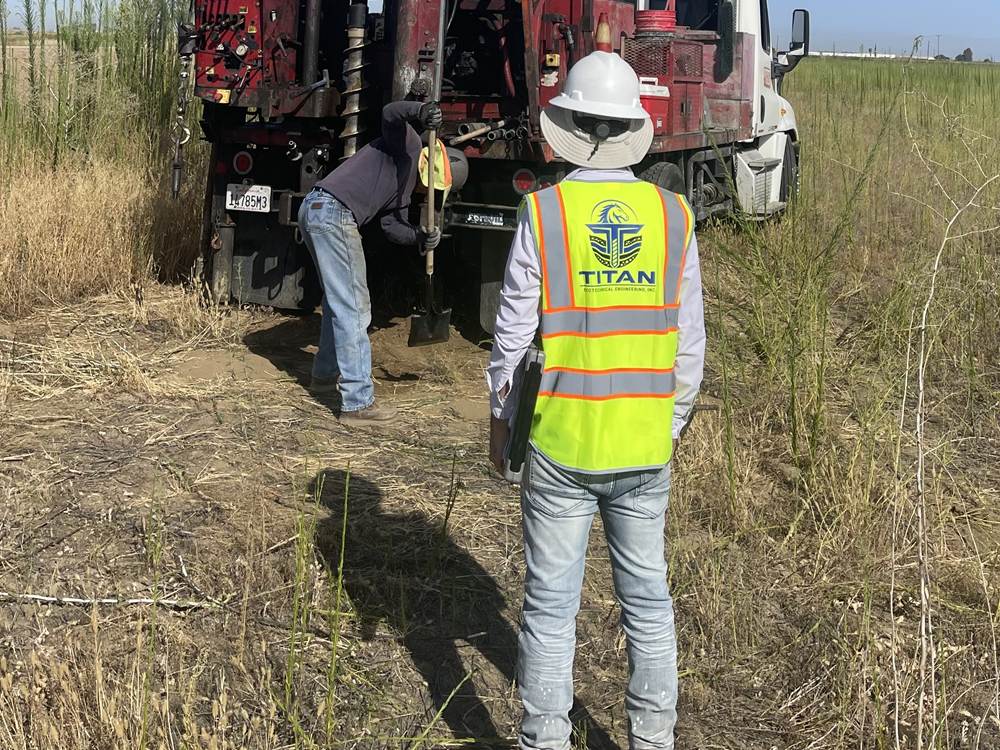
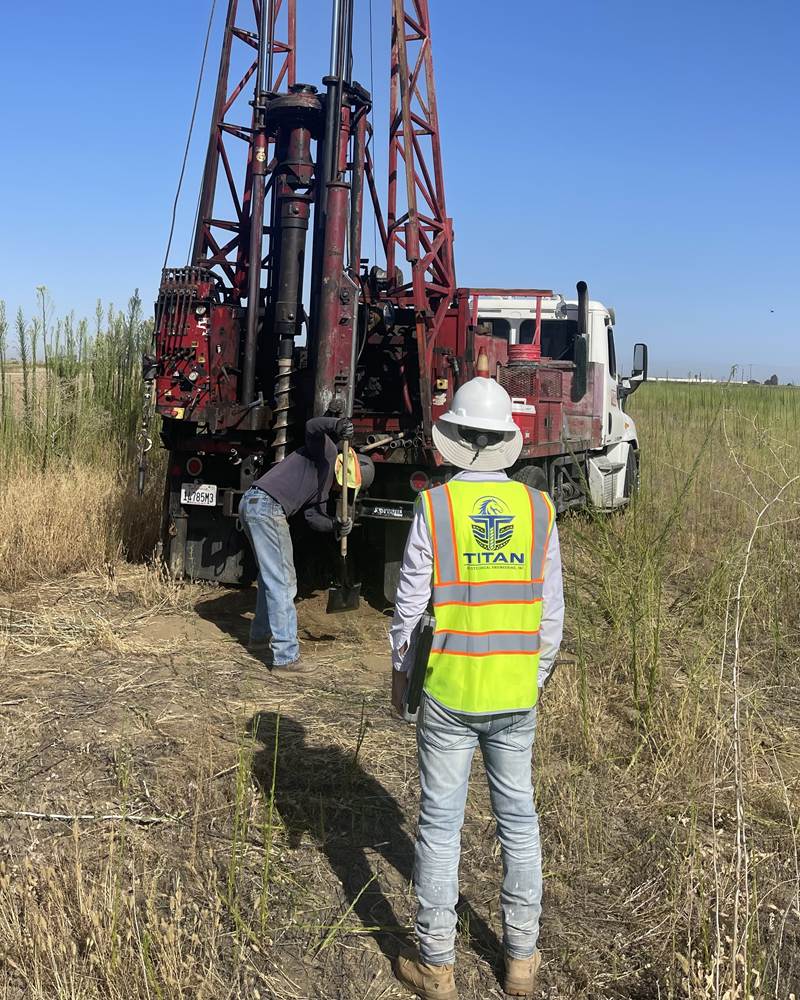
Titan Geotechnical field engineer in a branded safety vest and hard hat overseeing a truck-mounted drill rig as the crew advances a boring in an open field
Titan in the field — overseeing a drill rig during a subsurface investigation.

Services

What we do

Five services, one engineer accountable for all of them. Every report is prepared for the agency that will review it — City of Lancaster, City of Palmdale, or Los Angeles County.

  • Not sure what you need?

    Most people aren't. Tell us what the city or your architect asked for and we'll translate it into a scope and a fixed price.

    Ask us

Projects we cover

From a backyard ADU to a highway culvert

Titan provides geotechnical engineering, geology, construction testing, and septic design across every kind of project built in the Antelope Valley.

  • Residential
  • Commercial
  • Industrial
  • Roadways & Highways
  • Parking Lots
  • Solar Facilities
  • Public Works
  • Warehouses & Distribution Centers
  • Subdivisions
  • Utility Infrastructure
  • Bridges & Culverts

Who we serve

Built for homeowners and the professionals who design for them

Homeowners

Building an ADU, a custom home, or an addition? Did the county ask for a perc test? We'll explain what's required in plain English, give you a fixed price, and handle the technical back-and-forth with your architect and the plan checker.

  • Soils reports for ADUs, additions & new homes
  • Perc tests for septic systems
  • Straight answers on cost and timing
For homeowners

Engineers, architects, developers & contractors

Need a geotechnical subconsultant who answers the phone, knows local submittal requirements, and turns around plan-check responses quickly? That's the job we set up Titan to do.

  • Geotechnical subconsulting for civil & structural teams
  • Grading observation, compaction & special inspection
  • Lancaster, Palmdale & LA County plan-check familiarity
For professionals

How it works

Three steps from question to stamped report

  1. Tell us about your project

    Send the address or APN, what you're building, and any plans or agency comments. We'll confirm the scope and send a fixed written quote.

  2. We investigate & test

    We schedule the site visit, clear utilities, drill or excavate, log the soils, and run the laboratory tests the project calls for.

  3. You get a stamped report

    A clear, signed and stamped report with the recommendations your designer and the plan checker need — and we answer any review comments.

Titan Geotechnical field engineer in a branded safety vest and hard hat overseeing a truck-mounted drill rig as the crew advances a boring in an open field
Every soils report starts with real borings on the property.
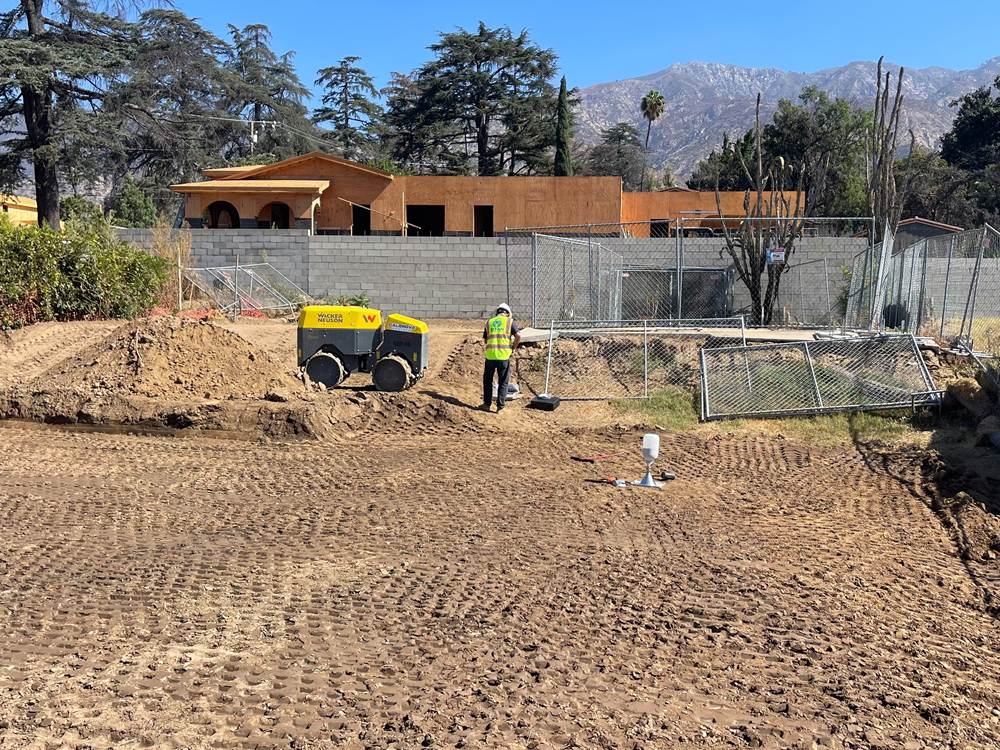
Titan technician in a safety vest on a graded residential building pad beside a trench roller, with a sand-cone density test set up in the foreground
During construction, we test that fill is compacted to the report's requirements.

FAQ

Questions we hear every week

How much does a soils report cost in Lancaster, CA?

For a basic residential soils report in the Antelope Valley — a single-family home, addition, or ADU on a relatively flat lot — Southern California fees commonly fall somewhere around $2,500 to $5,000. The number moves with how many borings are needed, how deep they go, whether the site needs a drill rig or can be hand-sampled, what lab tests the soils call for, and whether the plan checker will want extra analysis (slopes, fill, or a nearby fault zone).

Titan's pricing for a typical residential report: [NEEDS FROM MOHAMMED: Titan's standard residential soils-report fee or range]. Every quote is a fixed written fee for a defined scope — send us the address and plans and we'll give you an exact number before any work starts.

Do I need a soils report to build an ADU in LA County?

Often, but not always. The California Building Code requires a geotechnical investigation for new foundations, but the building official can waive it for small, simple structures where the soil conditions are already known. In practice, whether you need one depends on where you are and what you're building:

  • Detached ADUs and new two-story structures usually do need a soils report, especially in Lancaster, Palmdale, and unincorporated LA County areas with known collapsible or expansive soils.
  • Garage conversions that reuse the existing foundation often do not.
  • Your architect or structural engineer may want one even when the city doesn't, so they can design a smaller, cheaper foundation instead of assuming worst-case soil.

If you're not sure, call us with the address. We'll tell you honestly whether you're likely to need one.

What's the difference between a perc test and a soils report?

They answer different questions. A soils report (geotechnical investigation) tells your engineer how strong and stable the ground is — whether it can carry a foundation, whether it will settle, shrink, or swell, and how it must be graded and compacted. A percolation test measures how fast water soaks into the ground, which determines whether a septic system will work on your lot and how large the leach field or seepage pit must be.

If you're building on a lot with no sewer connection, you may need both. See the side-by-side comparison on our homeowners page.

How long does a geotechnical investigation take?

For a typical residential project: fieldwork is usually a single day on site, laboratory testing takes roughly one to two weeks, and the stamped report follows after the lab results are in. Commercial and public-works projects scale with the number of borings and the analyses required.

Titan's typical turnaround from site visit to stamped report: [NEEDS FROM MOHAMMED: typical residential report turnaround, e.g. X–Y business days]. If you have a plan-check deadline, tell us up front — we'll say plainly whether we can meet it before you sign anything.

Will you work with my architect, engineer, or contractor?

Yes — that's the normal way we work. We'll coordinate directly with your architect, structural or civil engineer, and contractor, send them the report in the format they need, and answer plan-check comments that relate to the soils. You stay in the loop on every email, but you don't have to be the go-between.

What areas do you serve?

We're based in Lancaster and work throughout the Antelope Valley: Lancaster, Palmdale, Rosamond, Quartz Hill, Littlerock, Lake Los Angeles, and the surrounding unincorporated areas of northern Los Angeles County. If your project is outside the valley, call us anyway — we'll tell you if we can serve it well or refer you to someone who can.

Are you licensed?

Yes. Titan's reports are prepared under the responsible charge of, and stamped by, Mohammed Khalid, MS, PE — a licensed California Professional Engineer (license no. [NEEDS FROM MOHAMMED: California PE license number]). You can verify any California engineering license on the Board for Professional Engineers, Land Surveyors, and Geologists (BPELSG) license lookup at bpelsg.ca.gov.

Do I need to be home on the day of the site visit?

Usually not. We need clear access to the area where the work will be done, a gate code or unlocked gate if the lot is fenced, and the location of any known underground utilities, septic tanks, or irrigation lines. We call Underground Service Alert (DigAlert, 811) before any drilling. Most homeowners are at work while we're there; we'll call you when we arrive and before we leave.

Is Antelope Valley soil really that different?

It can be. Much of the valley floor is desert alluvium — sandy, silty soils that can be dense and strong when dry but collapse (settle suddenly) when they get wet for the first time from irrigation, a broken pipe, or poor drainage. Other areas, especially near the old lakebeds, have expansive clays that swell and shrink. Parts of the valley have also experienced ground subsidence tied to groundwater pumping, and the San Andreas Fault runs along the southern edge near Palmdale. A local soils report exists to catch exactly these conditions before they show up as cracks in your slab.

How much does a perc test cost?

Percolation testing costs depend on the type of test the county requires for your lot (shallow pit tests for a leach field, or a deep boring for a seepage pit), how many test locations are needed, and whether a drill rig is required. Across Southern California, a residential perc test and report commonly runs in the low-to-mid thousands of dollars. Titan's pricing: [NEEDS FROM MOHAMMED: Titan's standard residential perc-test fee or range]. We'll give you a fixed written quote once we know the lot and the system type.

Tell us about your project.

Send us the address and what you're building. We'll tell you what testing you actually need, what it involves, and when you'll have the report.

Call now Get a Quote